Sean Miller
Engineer
About Me
Hello, my name is Sean Miller. I am a passionate game developer looking to start a professional career. I am a naturally detail-oriented and technically minded person who excels at mathematics and logical thinking. I have an extensive background of education in multiple scientific and engineering disciplines (visible on my resume here), and I love to apply these skills in problem solving during software development.Creatively speaking, I think video games are the most expressive form of art. It's an intersection of several different artistic disciplines that demands either a mastery of multiple skills or a strong ability to cooperate, and the interactivity they present opens up opportunities for deeper connections to the audience than other media. It's for these reasons that I think a career in video game development would be fulfilling.
Resume
Projects
These games can be played on my Itch.io page here.
Source code for these games can be found on my Github page here.
Links to specific game and source code pages can be found on each project's "More" page.
Project Chimera (WIP)
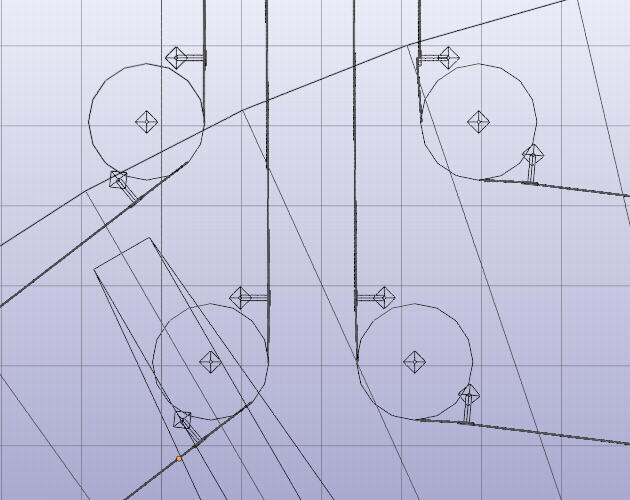
Singleplayer 3D narrative-driven puzzle game about a woman who was born without psychic powers, in a world where everybody else has them.
The Giving Well (2025)
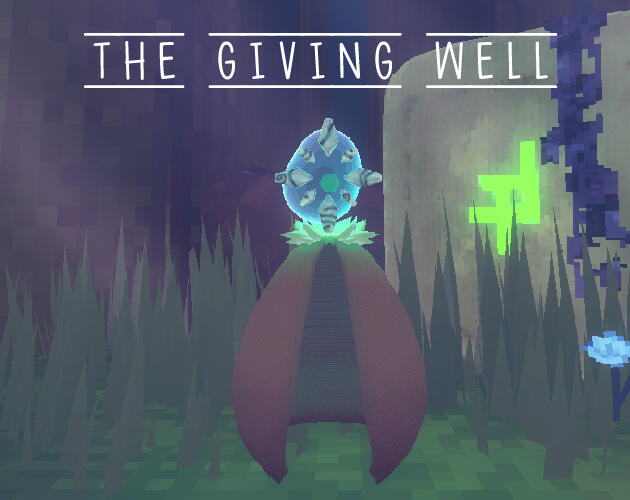
Singleplayer 3D puzzle platformer about a traveler fulfilling the wishes of a village's locals.
Bug Days of Summer (2024)
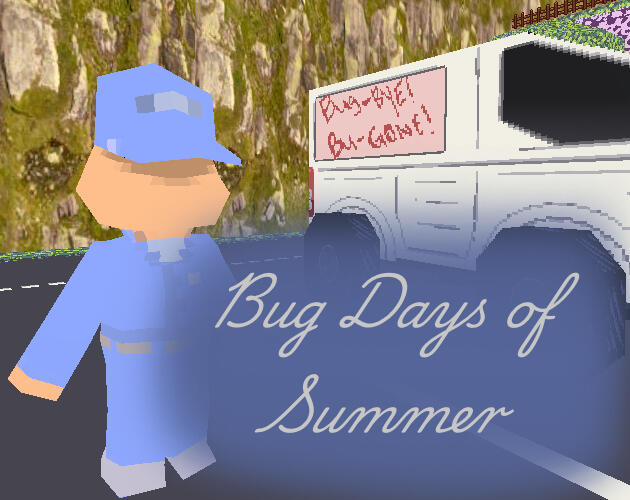
Singleplayer 3D role playing game and first person shooter about an exterminator come to take care of a serious infestation.
Designed to Climb (2024)
Singleplayer 2D platformer/management game about a robot, inside a bigger robot, climbing out of an even bigger hole.

Surprise Inspection (2024)
Singleplayer 3D puzzle game about sniffing out aliens on your ship.
Horde-iculture (2023)
Singleplayer 3D game about increasing your numbers and reclaiming a wasteland.
Keep an Ear to the Ground (2021)
Singleplayer 3D exploration game about a blind mole trekking across a desert.
Keep an Ear to the Ground
This game can be played on Itch.io here. (Playable in browser.)
Source code for this game can be found on Github here.
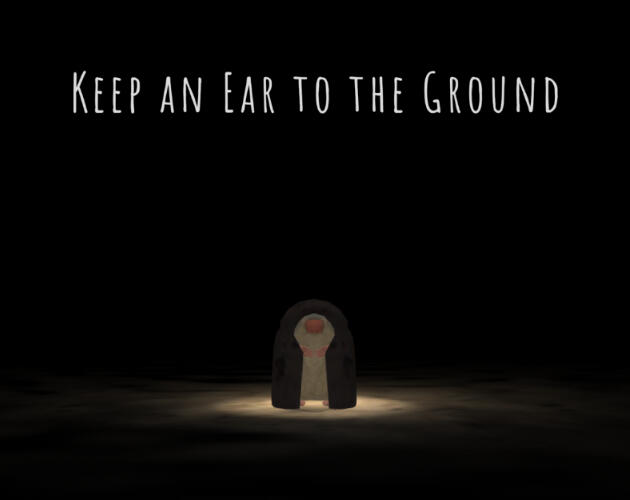
Keep an Ear to the Ground is a game about a blind mole merchant who gets separated from his caravan. In order to make it to the market in the city, he now has to trek across the desert by himself, using sound to dodge natural predators and find extra buried trinkets along the way.This game was a submission to the “Productivity Jam” in 2021, with the theme “reflections.” This was my first experience creating a game in Unity, made in one month using Unity 2020.3. I worked in a small team of two consisting of myself and a 3D artist. My responsibilities included gameplay design, scripting, shader code, sound design, and implementing 3D models and animations supplied by the artist.
Contributions
Gameplay design
Third person player controller
Animation graphs
Echolocation effects
Tutorial system
Checkpoints
NPC dialogue boxes
Scripted events
Item pickups
Enemy AI
Windstorm effects
Sound effects
UI
Highlights
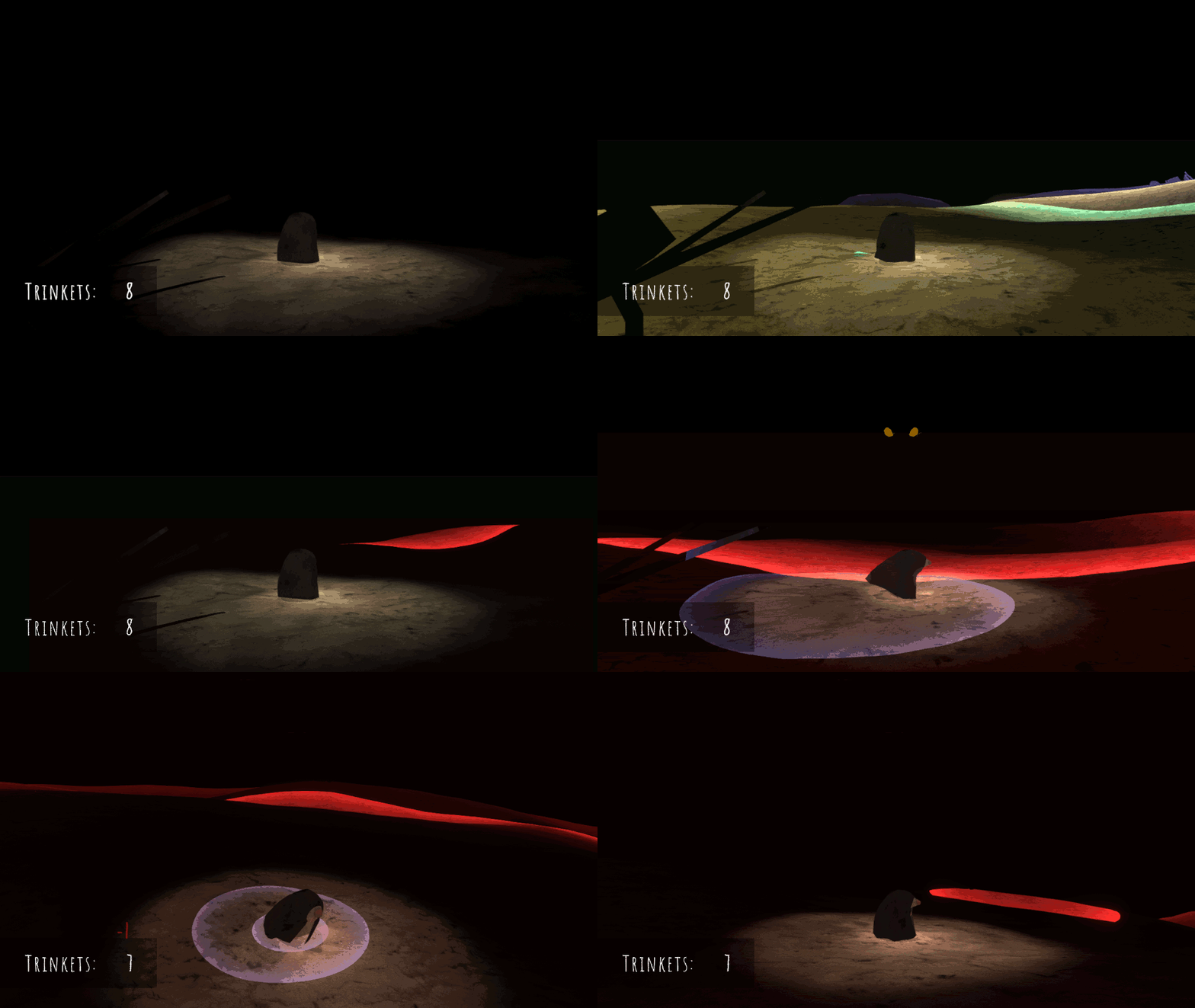
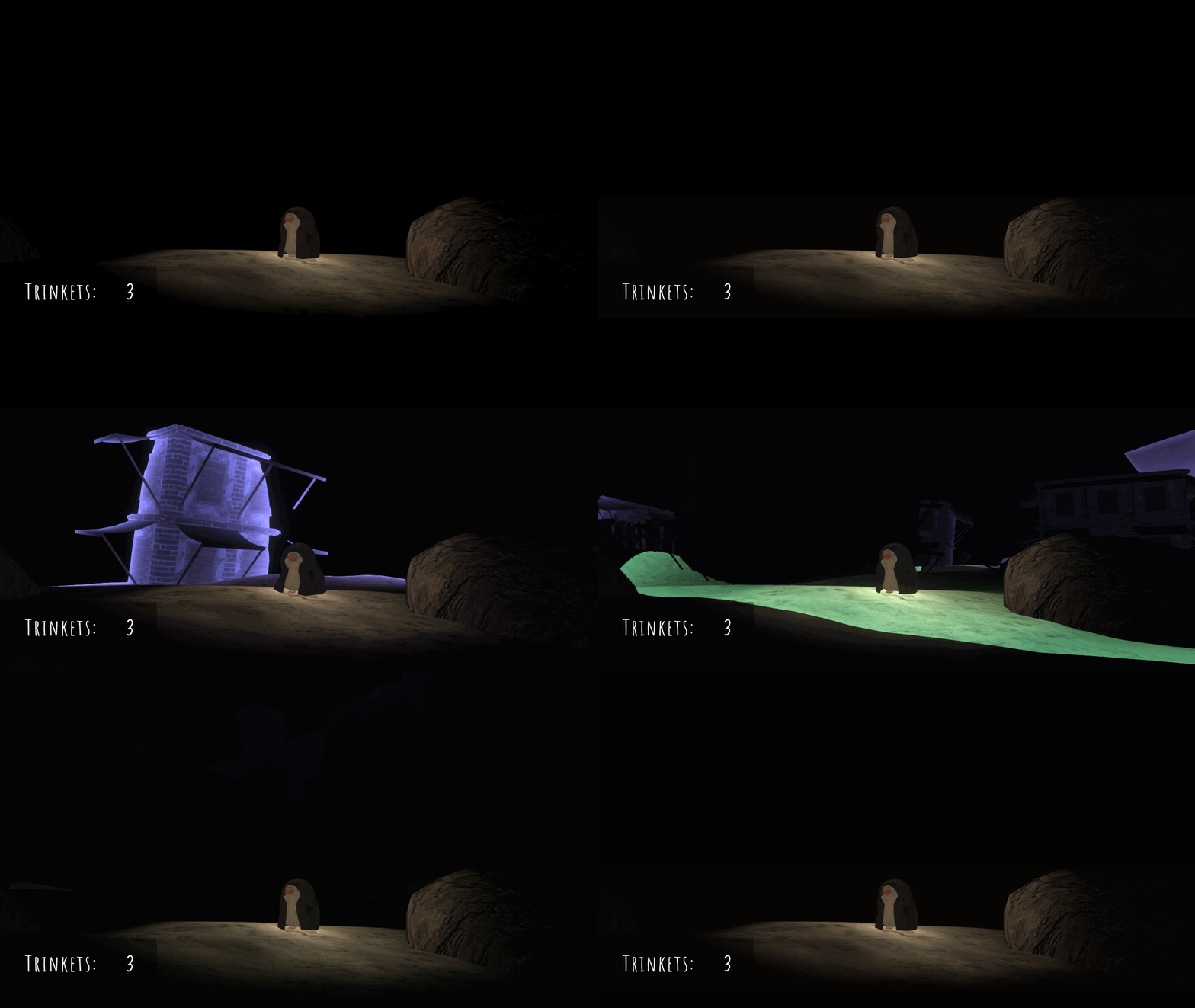
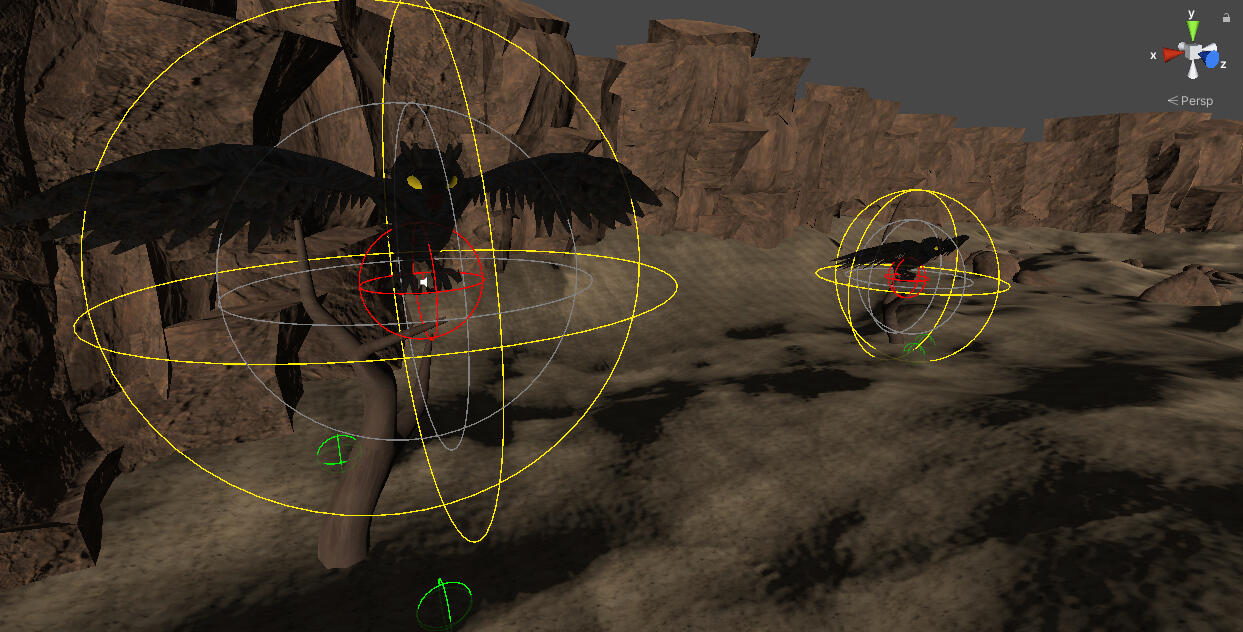
A key part of the gameplay was the ability of the player to send out sound waves which allow them to briefly see the world around them. I accomplished this with a custom shader synced with a management script. With the script, I could keep track of the player, objects, and enemies in the scene. The player could create waves, and objects buried in the sand could reflect waves back at the player.Also important were the enemies, a snake and an owl. The two creatures had distinct behavior, but both were controlled with a finite state machine, could "hear" the player, and were able to deal damage and steal a trinket off the player upon a successful attack.
Lessons Learned
How to request what I need from an artist via rough sketches and mood boards.
Coordination with team members is important to minimize the amount of time spent idling while waiting on something from each other.
Horde-iculture
This game can be played on Itch.io here.
Source code for this game can be found on Github here.
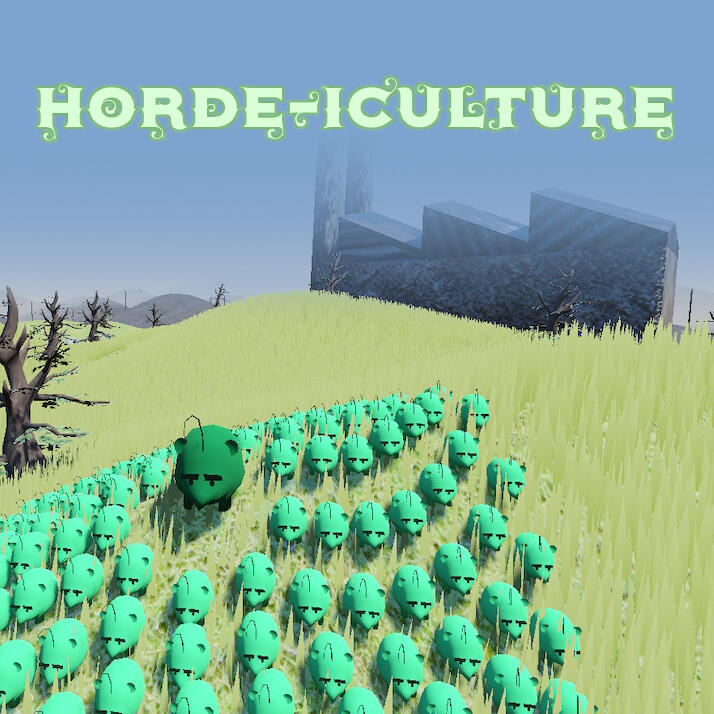
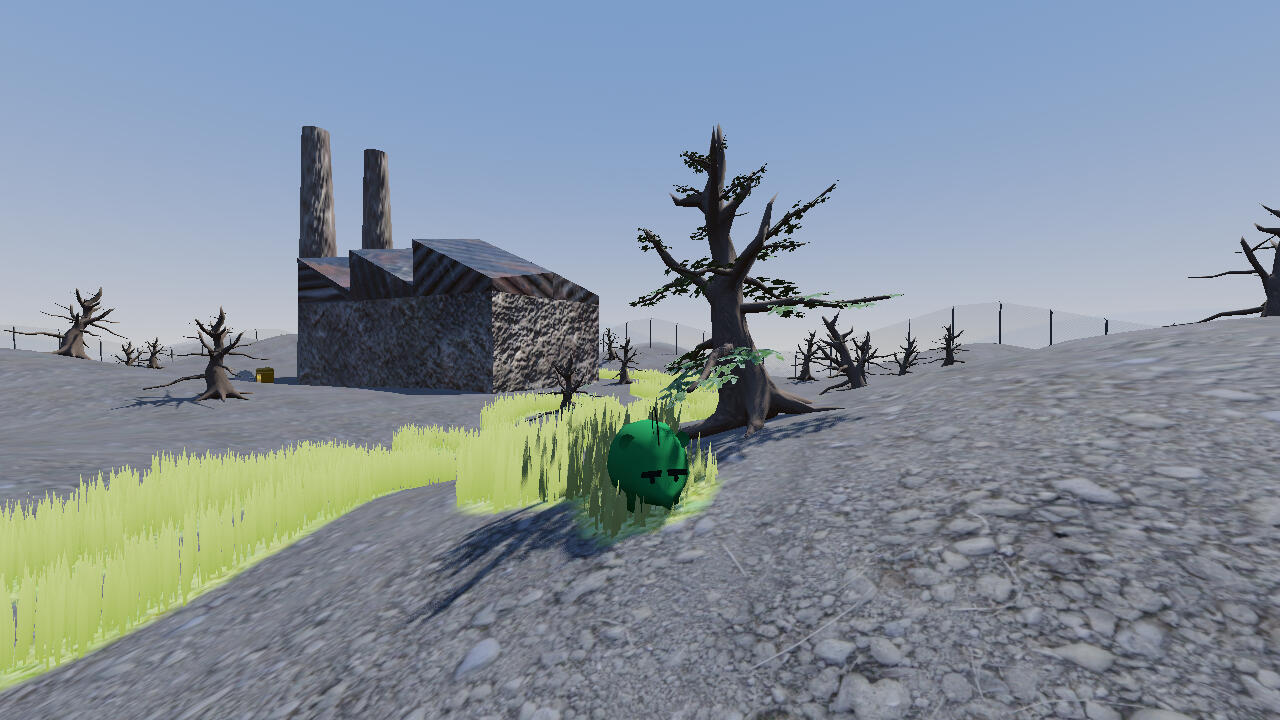
Horde-iculture (a portmanteau of “horde” and “horticulture”) is a game about a forest sprite bringing life back to a tract of land which has already been drained of its resources. He accomplishes this by dismantling the industrial machinery left behind, freeing up smaller sprites to join him.This game was a submission to the “Jump Ship Jam” in 2023, with the theme “strength in numbers.” This was my first experience creating a game with Godot, made in one month in Godot 4.1. I worked on this project solo, and my responsibilities included gameplay design, scripting, shader code, 3D asset creation, and sound design.
Core Features
Gameplay design
Third person player controller
Third person camera
3D assets and animations
Animation graphs
Breakable structures
Management system for throwable sprites
Heightmapped terrain
Terrain splatmap
Enemy AI
Sound effects
Highlights
The most striking visual element of this game is the trails left behind as the player traverses the field. Each sprite paints its own trail, so when the player has a large herd, they're able to paint large swathes at once. This emphasizes the snowballing nature of the gameplay. I accomplished this by rendering each sprite's lateral position onto a mask texture. The mask was then used to decide where to draw the grass texture over the dirt, and also where to place grass particles.
Lessons Learned
For a project like this where the gameplay is supposed to be the driving force, a clear end goal for the player is a must. I hope to revisit this project someday to give it a more satisfying conclusion.
Surprise Inspection
This game can be played on Itch.io here.
Source code for this game can be found on Github here.
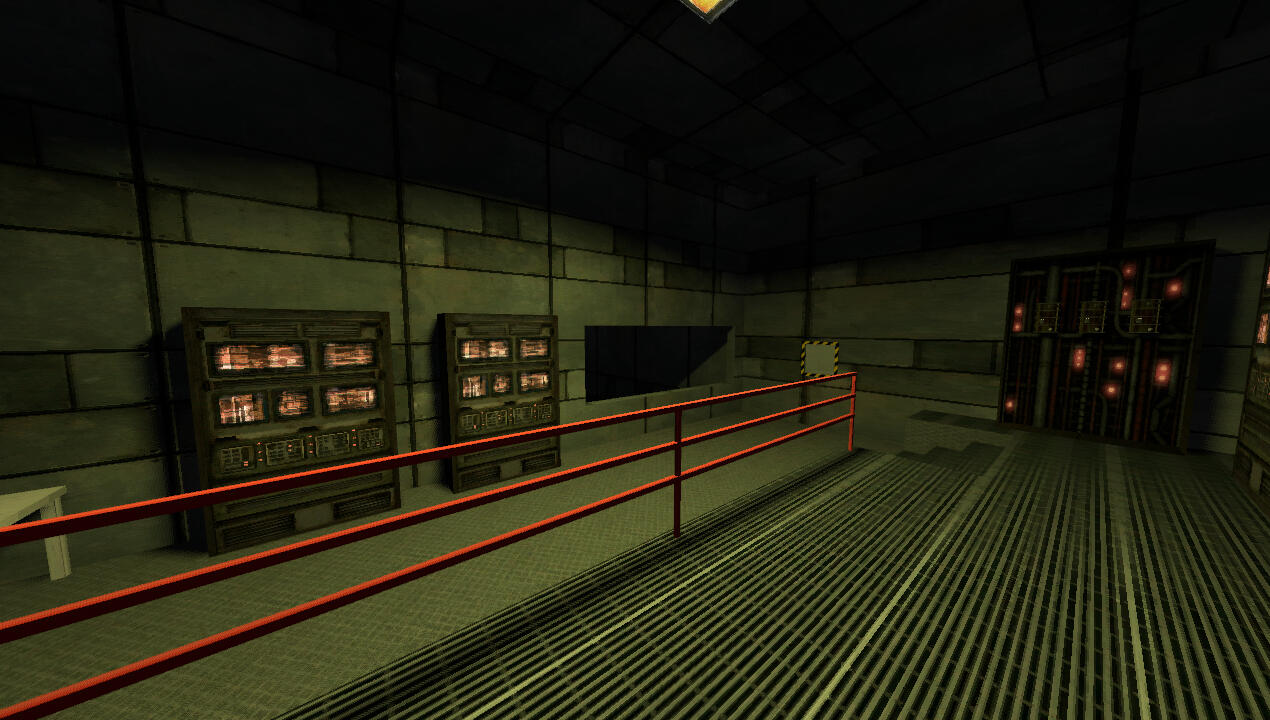
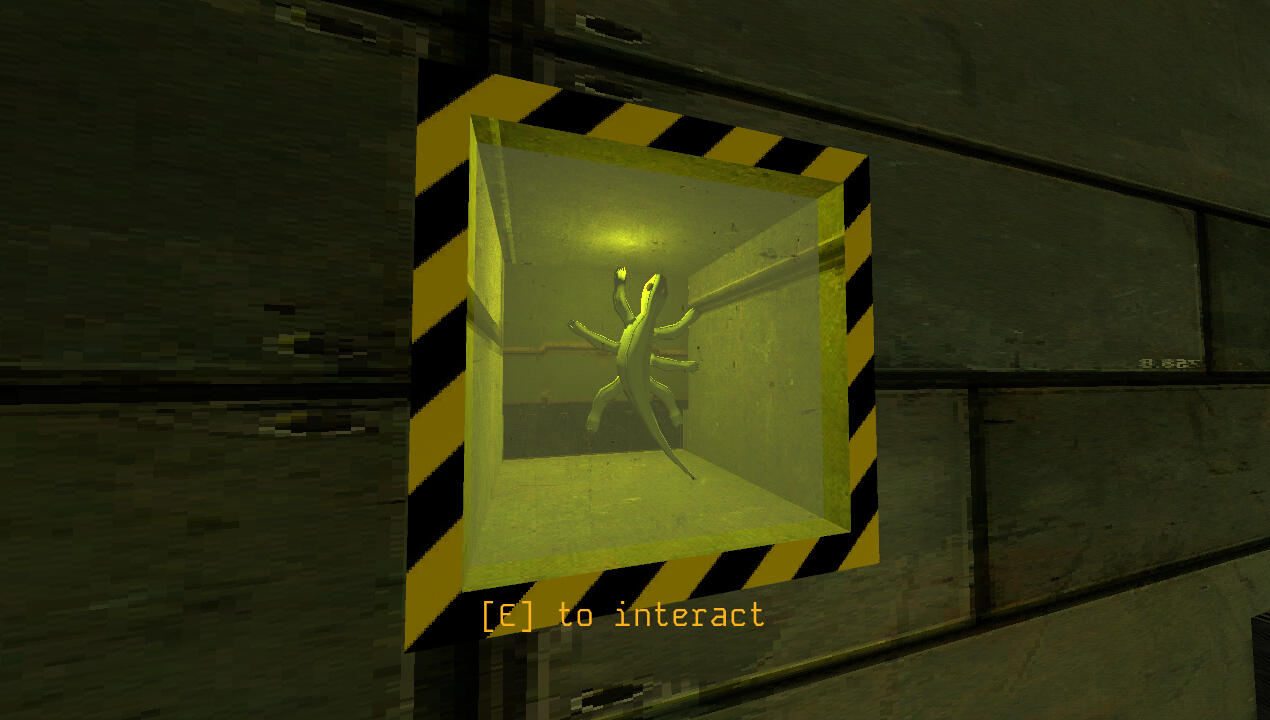
Surprise Inspection is a game about an engineer on a starship trying to find and dispose of shape-shifting space vermin at their work station. The creatures have disguised themselves as ship parts, and it’s up to the player to use their tools and find out which ones are actually aliens.This game was a submission to the “Acerola Jam 0” in 2024, with the theme “aberration.” It was made in two weeks in Godot 4.2. I worked on this project solo, and my responsibilities included gameplay design, scripting, shader code, 3D asset creation, sound design, and music.
Core Features
Gameplay design
First person player controller
First person camera
3D assets and animations
Animation graphs
Dialogue system
Scripted events
Gameplay randomization
Tool puzzle mechanics
Sound effects
UI
Music
Dynamic music system
Highlights
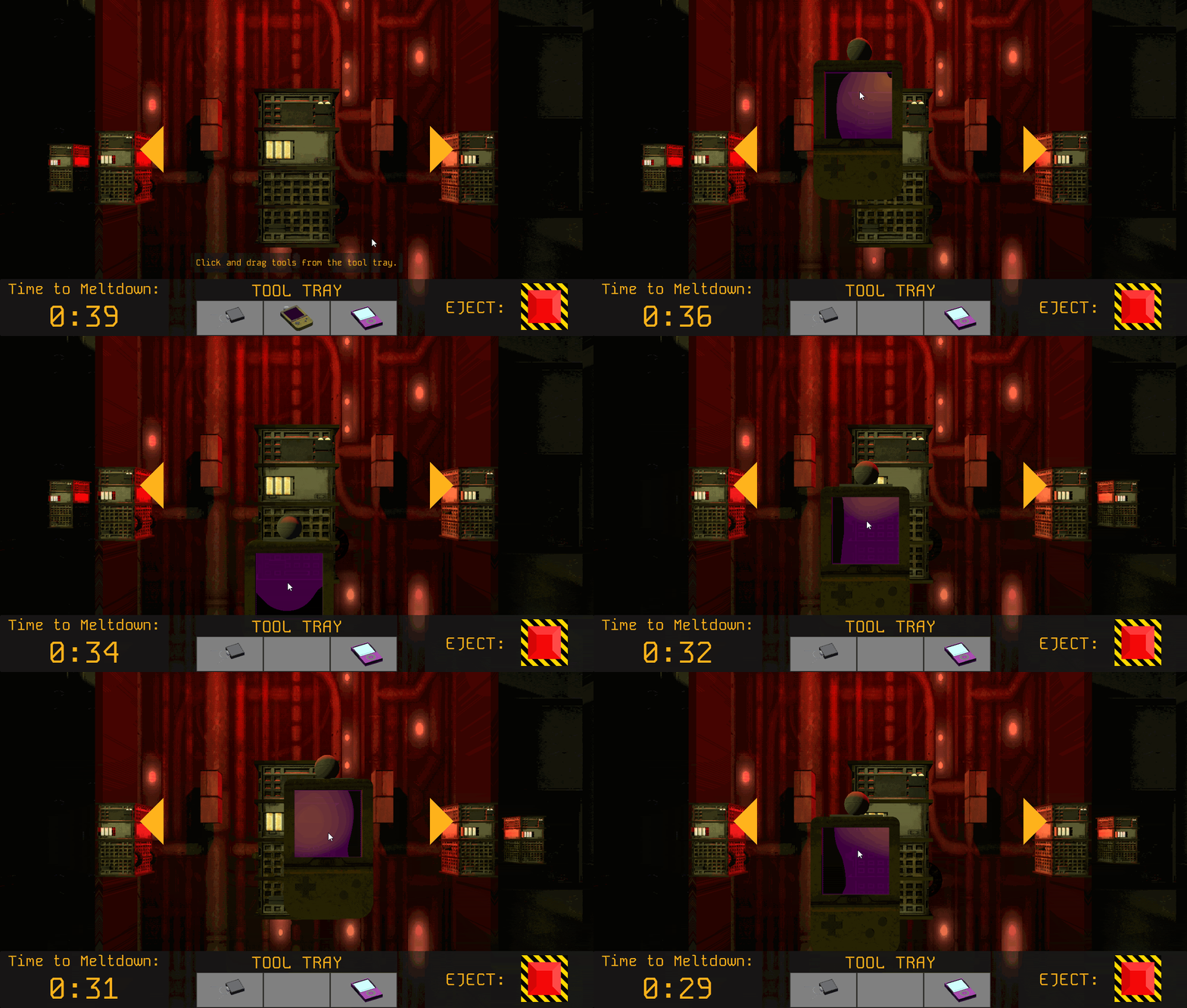
The short length of this game combined with its status as a game jam submission presented some challenges to gameplay. I wanted to make the game different every playthrough to help with replayability, but I also wanted to be sure a player who wins on their first try would get to use all of the tools. My solution was a system that randomized the rounds of gameplay at startup, ensuring every tool would reveal the winning clue and every part model would be used. This system used a set of tweakable parameters to create a rising difficulty curve regardless of which round each clue appeared.The tools themselves also presented a design challenge, demanding unique mechanics for each one and audio or visual effects to relay those mechanics to the player. In particular, the thermal camera was the most complex and fun to work on, requiring me to learn some basic raymarching to represent the heatmap of each part.
Lessons Learned
Having done everything on this game except the textures myself, I gained appreciation for the interdisciplinary nature of the medium and feel that I obtained some insight into the roles that I’m not usually occupying.
Playtests were an invaluable resource in late development. Watching others play without giving my feedback helped me to understand how a first time player was likely to interact with the game mechanics, and where changes needed to be made to better guide the player.
Designed to Climb
This game can be played on Itch.io here. (Playable in browser.)
Source code for this game can be found on Github here.
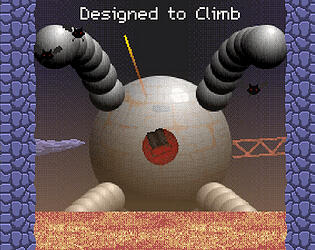
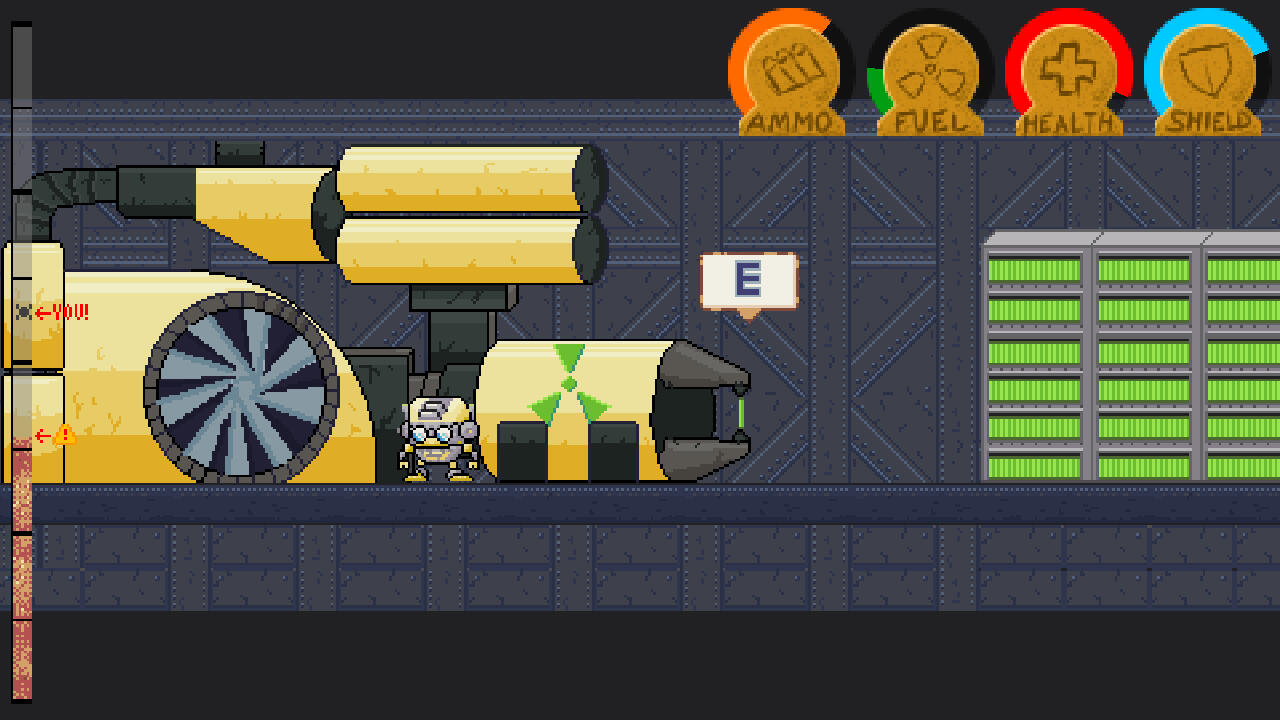
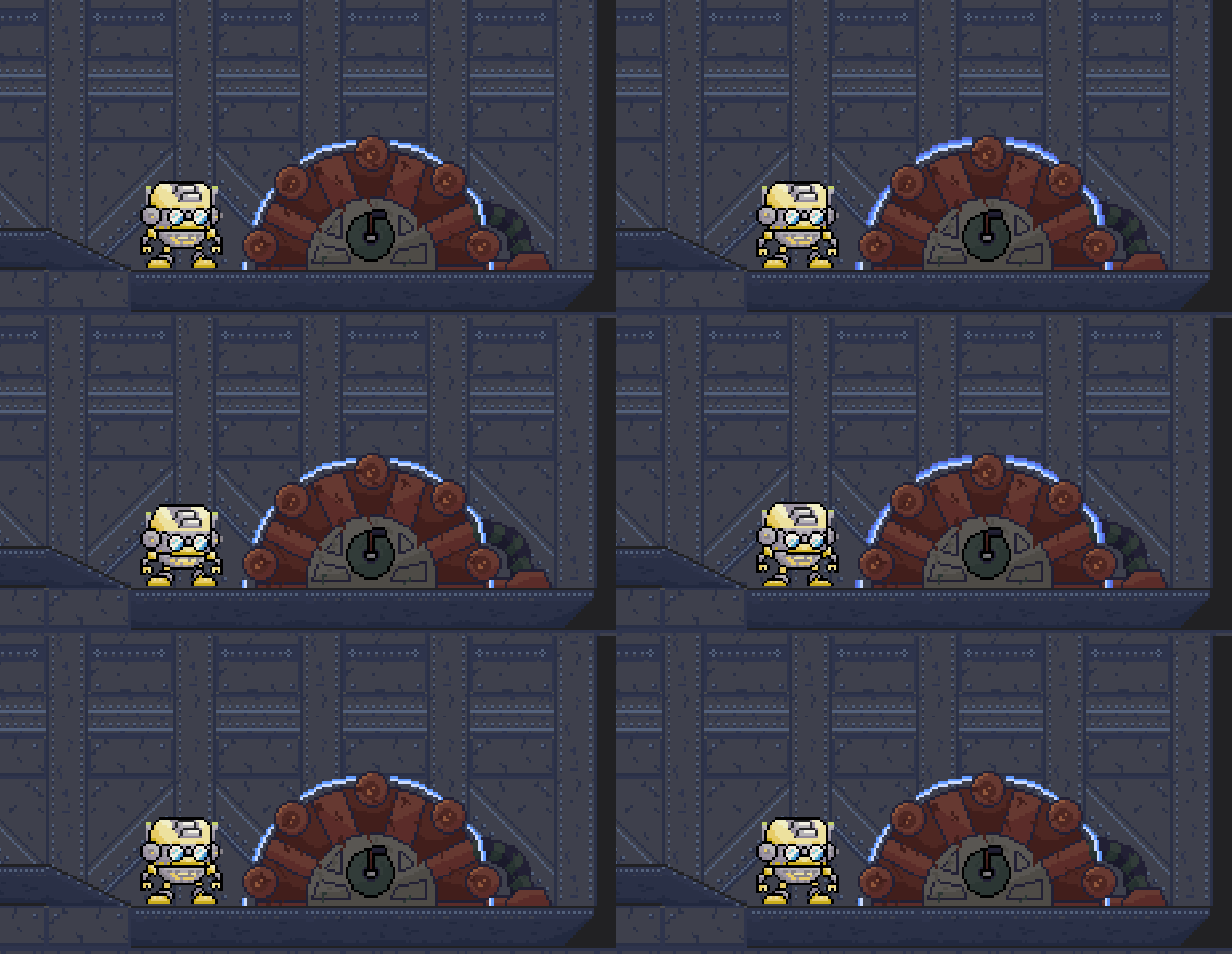
Designed to Climb is a game about a robot piloting a bigger robot out of an even bigger hole. The big robot is being attacked by aliens as it crawls its way up out of the shaft, and it’s up to the little robot to keep the big robot’s shield power, ammo, and fuel topped off while still taking the time to pilot it from the cockpit.This game was a submission to the “GMTK Game Jam 2024,” with the theme “built to scale.” It was made in four days using Godot 4.3. I worked with a partner on this project, and my responsibilities included scripting and 2D art related to the exterior view, and sound design.
Contributions
Gameplay design
Climbing mechanics
Procedural climbing animation
Enemy scripting
Auto turret scripting
Transitions between the exterior and interior scenes
Sound effects
UI
Highlights
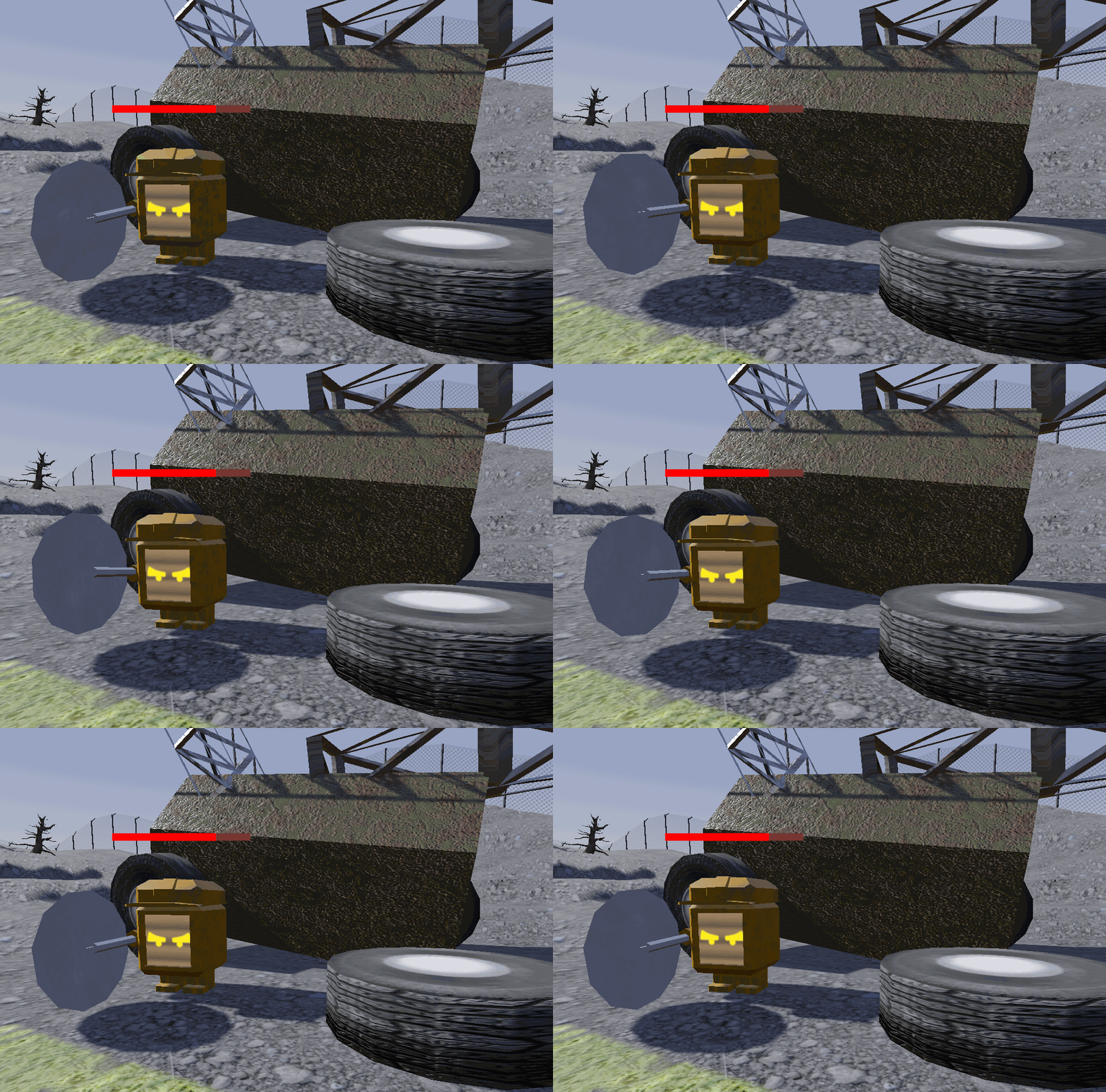
The gameplay centers around giving the player a series of pressing tasks which all distract from each other. The motivation driving this is to keep the health of the large robot from reaching zero, either from alien attacks or the rising lava in the pit. For us, this meant balancing how quickly each meter would deplete, how quickly the player could get to each station, and how quickly the player could replenish each meter.I was primarily responsible for the exterior scene, which has the most visual feedback on the screen at any given moment. The attacking aliens, the turret firing, and the rising lava are all non-interactive elements, but their inclusion gives logical reasons for the meters' depletion and creates a greater sense of pressure on the player to keep up with their tasks.
Lessons Learned
With only four days to submit, this was the least amount of time I've had to work on a project yet. Excellent time management and coordination with my partner were a must.
Bug Days of Summer
This game can be played on Itch.io here. (Playable in browser.)
Source code for this game can be found on Github here.
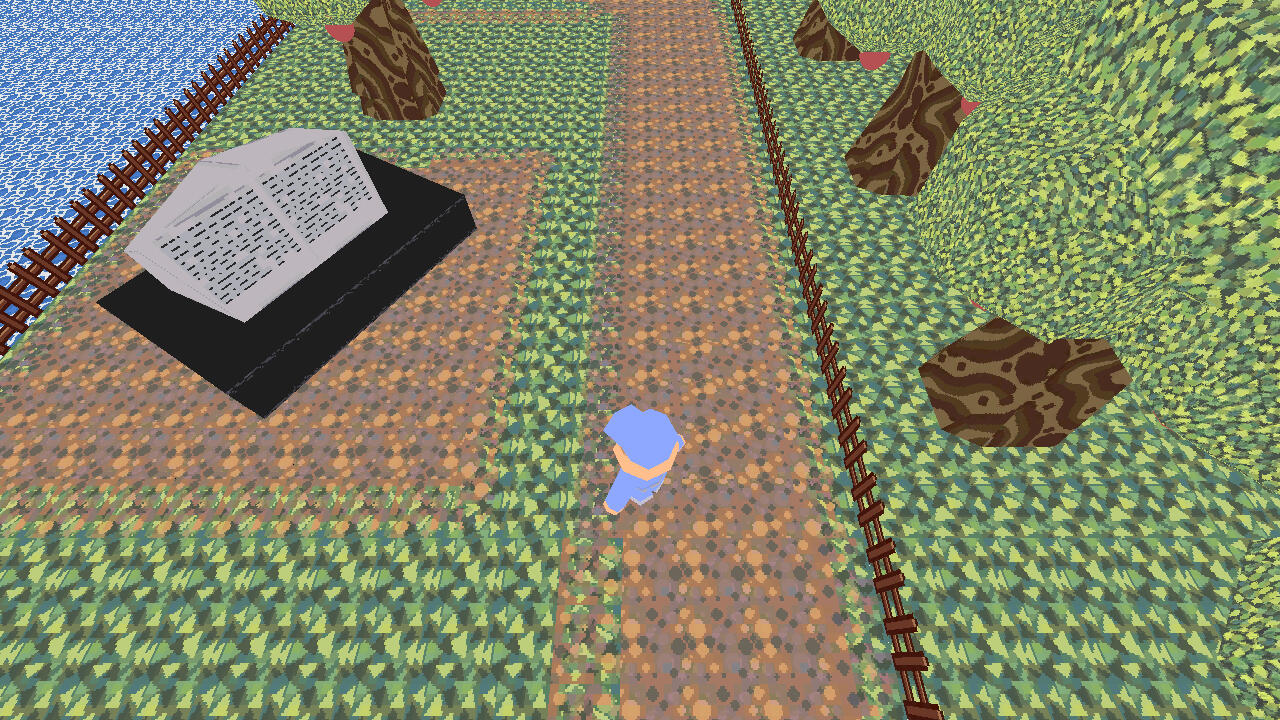
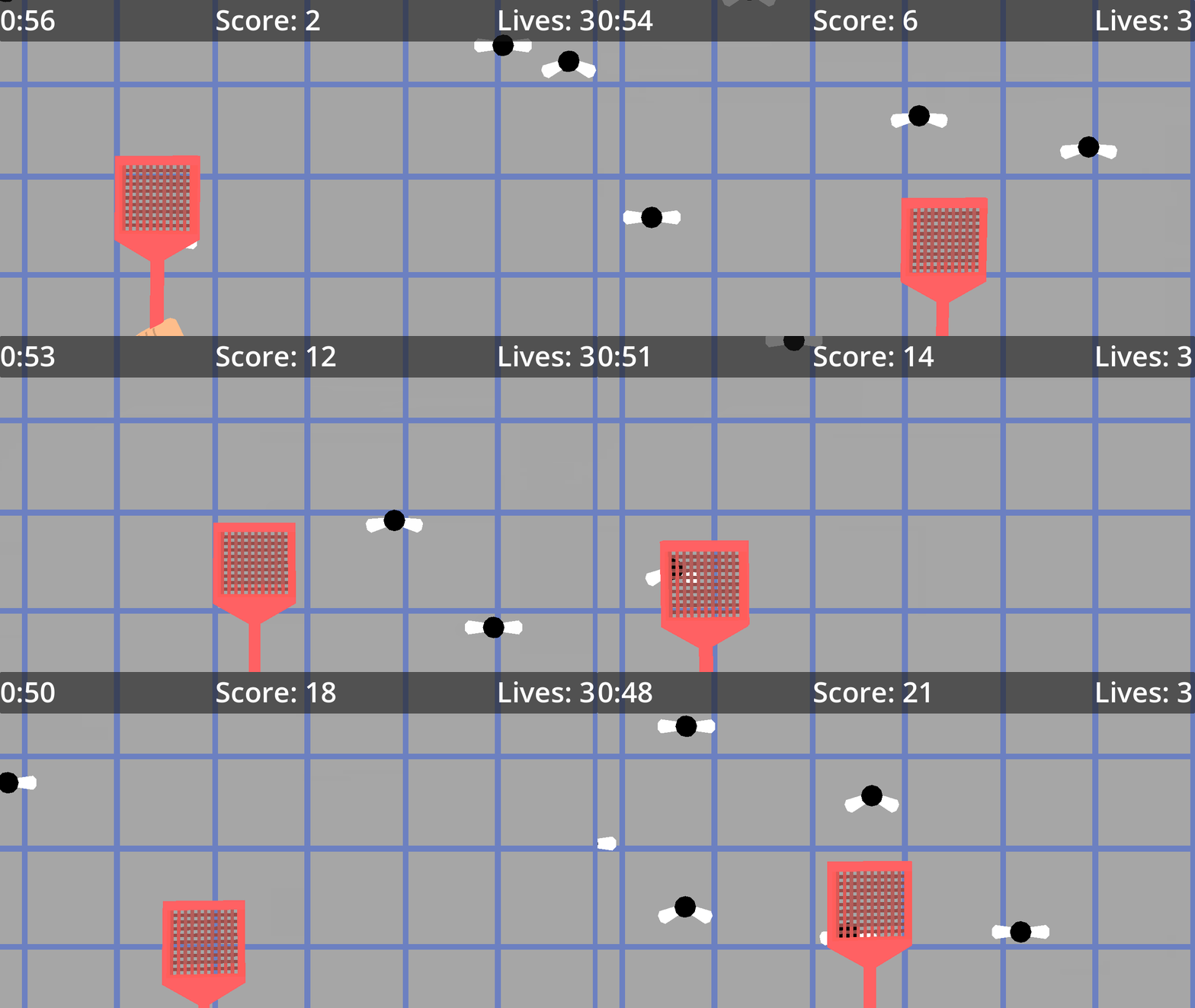
Bug Days of Summer is about an exterminator hired to take care of some pests around a quiet village. However, the mayor failed to mention that some of the bugs are the size of people.This game was a submission to the “Brackeys Game Jam 2024.2,” with the theme “calm before the storm.” It was made in one week using Godot 4.3. I worked with another programmer and a 3D character artist on this project, and my responsibilities included scripting, level design, 3D asset and texture creation, and sound design for the first person shooter portion of the game, as well as the fly swatter minigame.
Contributions
First person player controller
First person camera
Textures
3D props
Level design
Enemy AI
Item pickups
Incorporated a workflow for creating levels in an external editor and importing them to Godot
Optimized visual effects to work in the browser-playable “Compatibility” renderer.
Fly swatter minigame
Highlights
My responsibilities for this project primarily involved the first person shooter segment of the game. In order to match the Quake-like aesthetic we were going for, I took the effort of using J.A.C.K., a Quake and Half-Life map editor to create the level. Textures were created with an old Quake WAD editor called Wally. I was then able to import the level into Blender to make any final touches, and export it into Godot. Using this workflow allowed me to sculpt and edit the level more comfortably than Blender alone would have, plus it was just fun to use tools authentic to the game whose look I was trying to mimic.
Lessons Learned
I feel that this project was over-scoped. This game was effectively three games in one, with only two programmers sharing the workload over the course of a normal week.
Procedural runtime animations can take the place of many data-driven animations, and make tweaking timings much easier.
The Giving Well
This game can be played on Itch.io here. (Playable in browser.)
Source code for this game can be found on Github here.
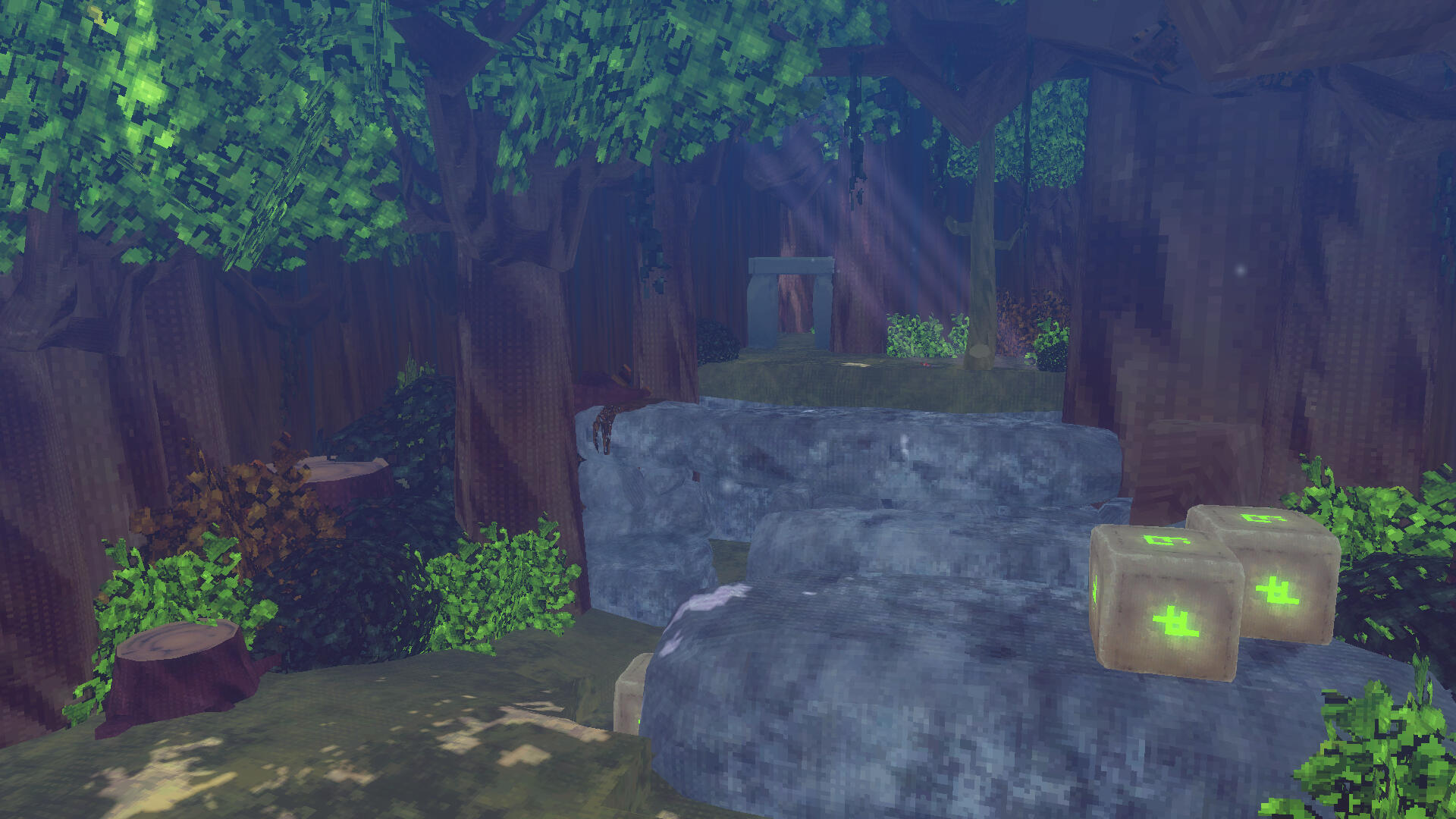
The Giving Well is about a traveler who overhears the townspeople of a quiet village making wishes at the town well. The traveler decides to go out into the local woods to find things that can satisfy these wishes.This game was a submission to the "thatgamecompany x COREBLAZER Game Jam 2025," with the theme "generosity." It was made in three weeks using Godot 4.4. I collaborated with a 3D artist and a musician on this project, and my responsibilities included scripting, level design, and sound design.
Contributions
Third person player controller
Third person camera
Puzzle design
Level blockouts
Level transitions
Cutscenes
Secret "Tree Spirit" collectibles
Level configs based on secrets found
Item pickups
Optimized visual effects for browser compatibility
Highlights
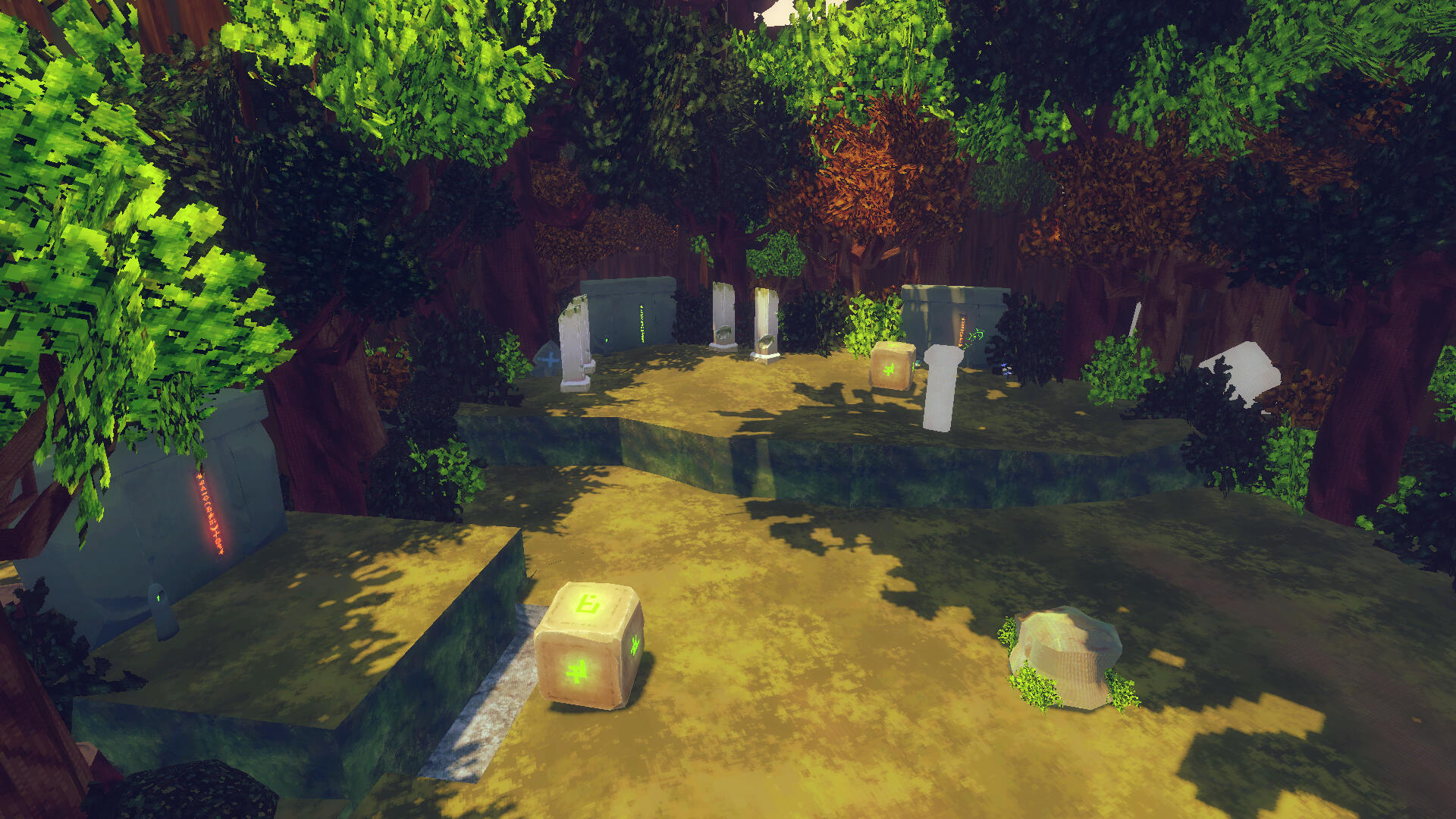
The gameplay largely revolves around unique interactions between the player's grappling hook and various puzzle elements laid out in the world. To accomplish this, I leveraged Godot's built-in physics system and assigned each type of element to a different physics layer. Behavior would be applied to all physics bodies on a particular layer, rather than assigning a script to each physics body. For the limited scope of this project, this allowed us to rapidly test different ideas with a great amount of flexibility, and even let us make unique set pieces with familiar behavior, such as a chopped tree in level 1, or a rotating gantry at the end of level 3. The limiting factor on the development of puzzle elements became what we felt we could reasonably introduce to the player within the expected playtime.I also devised a system of loading different configurations of maps at runtime. The village has different background set pieces that will appear depending on how many tree spirits the player has found up to that point, but the village also appears with different characters, cutscenes, and at different times of day independent of that. This system allowed the artist to only have to make the constituent parts of the different village scenes, and we used in-game logic to assemble them at runtime, rather than having to choose from a premade list of every possible permutation.
Lessons Learned
Having an existing library of code and assets from previous projects to pull from is extremely valuable.
Collaboration with team members of other skill sets is fun and results in a much better end product.
This was my first time really tackling puzzle design.
Project Chimera
This game is a work in progress, and is currently closed-source.
Some snippets of code may be made available upon request.
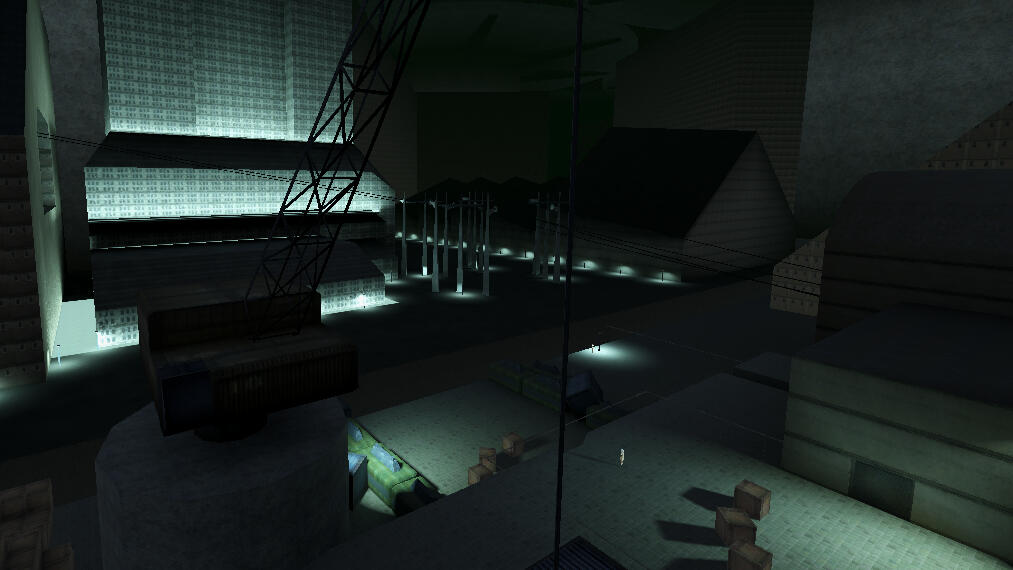
Project Chimera is set in a distant future when sea levels have risen, populations have been forced into confined megacities, and the development of psychic powers has become commonplace. While relatively rare, there are still those who are born without powers, and they must find other ways to cope in this world that wants to leave them behind. Our protagonist is one such person. She is thrown from her quiet life at the affluent top of the city, and, with the help of some companions, must journey back to the top from the very bottom. Along the way she witnesses first hand the varied conditions people live under within the city, sees how they treat the differences they perceive within each other, and struggles with her own shortcomings.This game is a long-term project, targeting a much more substantial play time. It is being made with Godot, in collaboration with a 3D artist. I am primarily responsible for scripting, shaders, and level design.
Highlights
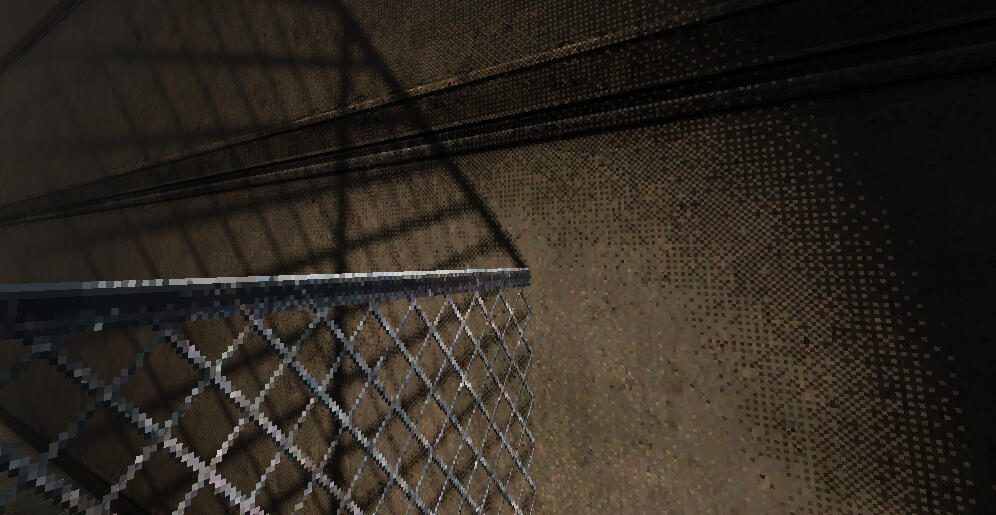
One of our goals with this game is to seamlessly combine physics puzzle mechanics with stealth gameplay. Even at this early stage of development, this goal has already presented some fun challenges. In particular, using Godot's physics engine to allow the player to pick up and manipulate objects in the world proved surprisingly tricky. I could get physics objects to follow player movements easily enough, but the simplest implementation resulted in unrealistic interactions between the held object and other physics objects in the scene. In the end, I settled on a system of simulated damped harmonic oscillators acting on the held object, which allows it to move convincingly with the player while still using applied forces within the physics engine to move it, allowing for realistic interactions across the board.On the graphics side of things, I recently wrote a shader that dithers dynamic lighting and shadows along the texel grid of the surface's diffuse texture. My implementation fades the effect at distance or at shallow angles to avoid distracting Moire patterns from emerging. I'm quite pleased with the effect, as I think it makes for a unique look and complements the aesthetic we're targeting nicely.
Lessons Being Learned
Writing and narrative design are both new to me and my design partner, so I've spent quite a bit of time in the planning stages getting acquainted with the process, and coming up with a rough draft that I'm excited to work off of as we go!